
For free quotations & home visits call
Grimsby 01472 565 084 or
Louth 01507 640 072
It’s a question more and more homeowners and business owners are asking as energy prices climb and renewable energy becomes the norm: Can I Install Solar Panels on a Flat Roof? If your property doesn’t have a traditional sloped roof, you might assume solar isn’t an option for you. The good news is that flat roofs can be just as suitable for solar panels, and in some cases, even better.
Flat roofs are common on extensions, garages, commercial buildings, and modern homes. While they look different from pitched roofs, they offer plenty of potential when it comes to installing solar panels. As long as the system is designed properly and fitted by professionals.
How solar panels are installed on flat roofs
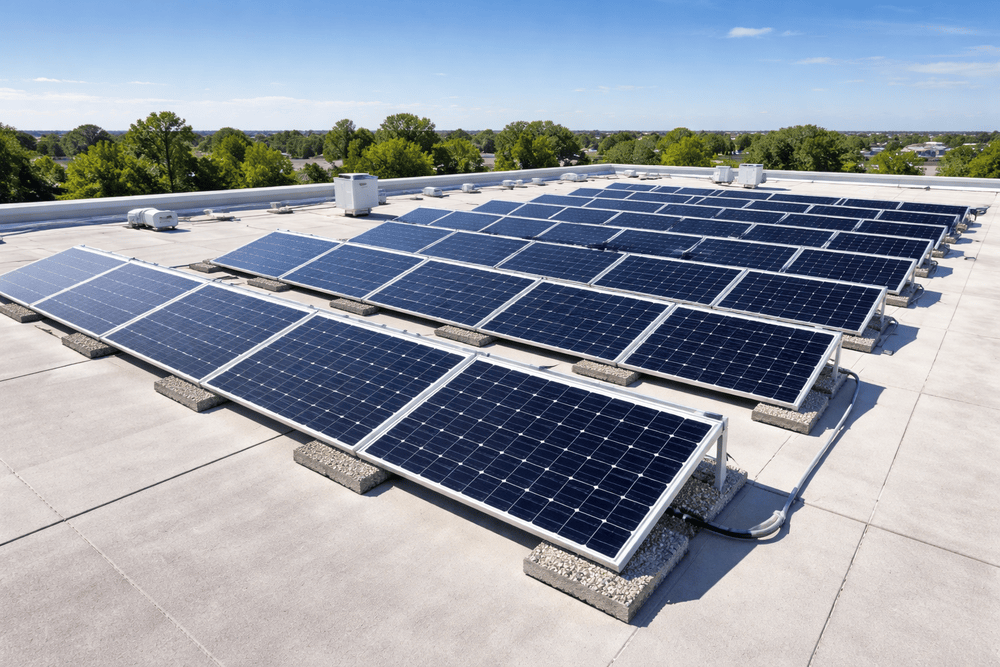
Unlike sloped roofs, flat roofs don’t naturally face the sun at an ideal angle. To get around this, solar panels are mounted on frames that tilt them towards the sun. These frames are carefully angled to capture as much daylight as possible throughout the year. The exact angle depends on factors such as your location, how much sun your property gets, and how much energy you’re aiming to produce.
In many cases, these frames are weighted down rather than drilled into the roof surface. This is known as a ballasted system and helps protect the waterproof layer of your roof. However, if your building is exposed to strong winds or sits at height, additional fixings may be needed to keep everything secure and safe long-term.
The benefits of choosing a flat roof for solar panels
One of the biggest advantages of flat roofs is flexibility. Because the panels aren’t restricted by the natural slope of the roof, they can be positioned to face the best direction for sunlight. This can result in better energy production compared to some pitched roof setups.
Access is another big plus. Installers can move around more easily on a flat roof, which often makes fitting and maintaining solar panels simpler and safer. Ongoing maintenance, inspections, and cleaning are usually more straightforward too, helping keep your system running efficiently for years to come.
There’s also the visual side to consider. Solar panels on flat roofs are far less visible from ground level. For many homeowners and business owners, this is an attractive benefit, especially if the appearance of the building is important.
What to check before installing solar panels
Before going ahead, it’s important to make sure your roof is in good condition. Solar panels are built to last decades, so it makes sense that the roof beneath them should be in solid shape too. If your flat roof is already ageing or showing signs of wear, sorting this first can save you from future disruption and costs.
The structure of your building also needs to be assessed. Solar panels and their mounting systems add weight, and your roof must be able to handle it safely. A professional survey will confirm whether any strengthening work is required.
Drainage is another detail that shouldn’t be overlooked. Flat roofs rely on well-designed drainage to prevent standing water. The solar mounting system should be installed in a way that doesn’t block outlets or cause water to collect. If you’re already working with specialists in flat roofing grimsby, it can be helpful to coordinate roof improvements and solar installation at the same time.
Wind, weather, and long-term care
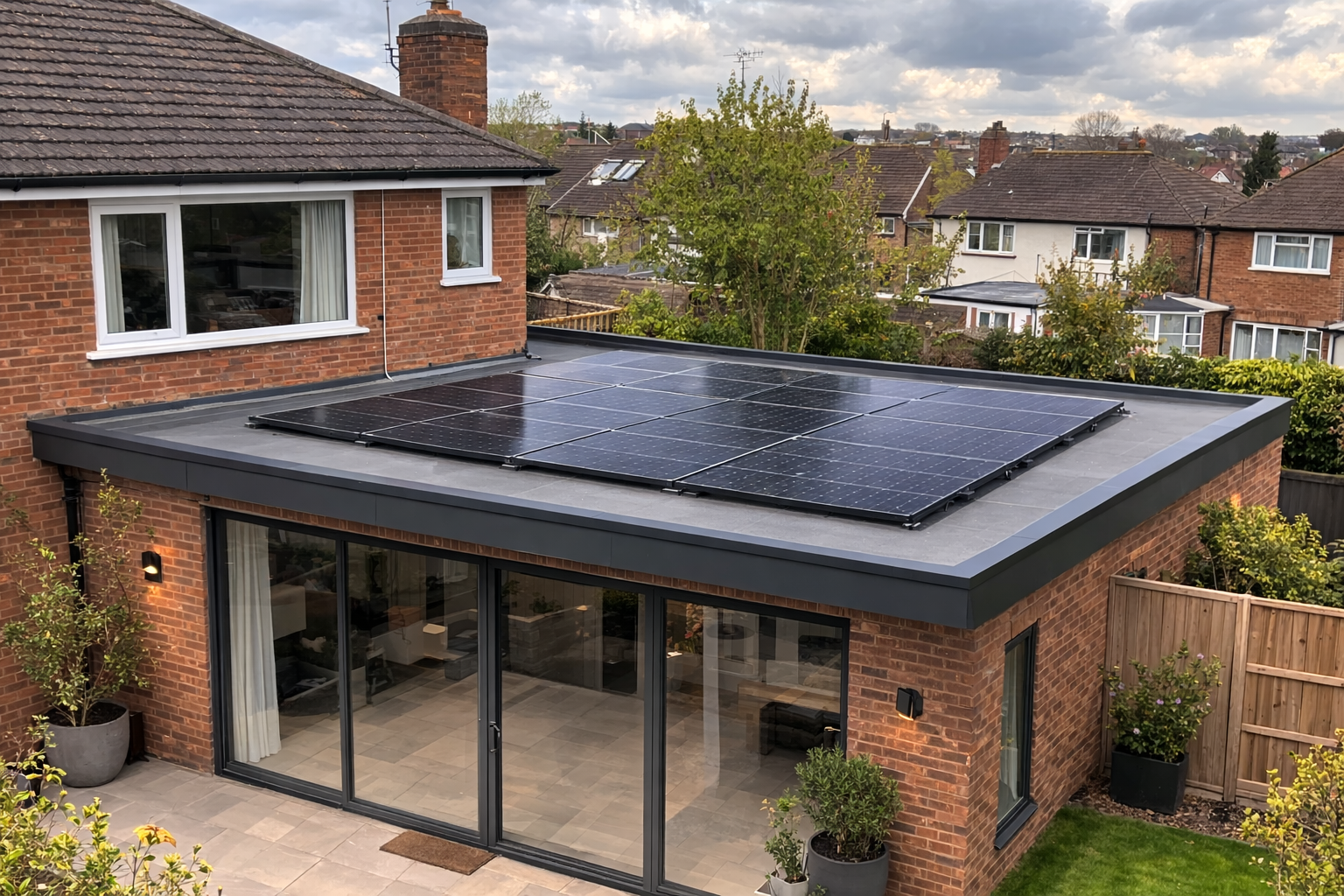
Flat roof solar systems are designed to withstand the UK’s weather, but wind exposure needs careful planning. This is especially true for taller buildings or properties in open areas. A reputable installer will calculate wind loads and design the system so it remains secure even in rough conditions.
Once installed, solar panels don’t require much day-to-day attention. Occasional cleaning and periodic inspections are usually enough to keep them working efficiently. It’s also sensible to have your roof checked from time to time, especially after extreme weather, to make sure everything remains watertight and secure.
Is a flat roof solar system right for you?
So, coming back to the original question: Can I Install Solar Panels on a Flat Roof? For most properties, the answer is yes. Flat roofs can be a great platform for solar panels when the installation is planned properly. With the right setup, you can reduce your energy bills. As well as, lower your carbon footprint, and make better use of roof space that might otherwise go unused.
Every property is different, though. Getting tailored advice will help you understand what’s possible for your building and what kind of results you can realistically expect.
Contact Us
If you’re thinking about installing solar panels on your flat roof and want honest, practical advice, get in touch with our team today. We’re happy to answer your questions and arrange a no-obligation assessment to see what’s possible for your property.
Customer Reviews